This guide pinpoints 10 clear indicators - from tread depth measurements and visual damage to performance symptoms, age factors and legal risks - and shows how to act on each warning. You will learn:
-
How tread depth reveals wear and when to measure it
-
What visual defects demand immediate attention
-
How worn tyres affect braking, aquaplaning and ride quality
-
When tyre age or the DOT code triggers replacement
-
The penalties and safety threats of driving on illegal tyres
What Is Tyre Tread Depth and How Does It Indicate Wear?
Tyre tread depth measures the vertical gap in the grooves of a tyre, enabling water dispersion and grip maintenance for safer braking. As tread reduces, water can’t channel away, raising aquaplaning and stopping-distance risks. Accurate measurement helps you replace tyres before performance deteriorates.
Tread Depth and Braking Distance
Research indicates that as tyre tread depth decreases, the distance required to stop a vehicle in wet conditions increases significantly. This is due to the reduced ability of the tyres to effectively channel water away from the contact patch, leading to a loss of grip.
This research supports the article's emphasis on the importance of maintaining adequate tread depth for safe braking.
| Measurement Context | Depth (mm) |
|---|---|
| UK legal minimum (all tyres) | 1.6 |
| Safety-focused recommendation | 3.0 |
Maintaining at least 3 mm ensures optimal wet-weather braking, while 1.6 mm marks the legal threshold leading us to examine UK requirements next.
What Is the Legal Minimum Tread Depth in the UK?
In the UK, the legal minimum tread depth is 1.6 mm across the central three-quarters of the tyre circumference; falling below this breaches regulations and fails an MOT test. Strict enforcement means tyres under this limit must be replaced immediately to avoid fines and penalty points and to maintain legal compliance.
Legal Requirements for Tyre Tread Depth
In the UK, the legal minimum tread depth for car tyres is 1.6 mm across the central three-quarters of the tyre. Driving with tyres below this depth is illegal and can result in penalties, including fines and points on a driving licence.
Driver and Vehicle Standards Agency, The Highway Code (2024)
This citation reinforces the legal aspects of tyre maintenance discussed in the article.
Why Is Replacing Tyres at 3mm Tread Depth Recommended?
Safety organisations recommend replacing tyres at 3 mm because wet braking distance can increase by up to 44 percent when tread falls from 3 mm to 1.6 mm. Earlier replacement preserves grip, shorter stopping distances and consistent handling under wet conditions, reducing accident risk and enhancing driver confidence.
How Do I Perform the 20p Test to Check Tread Depth?
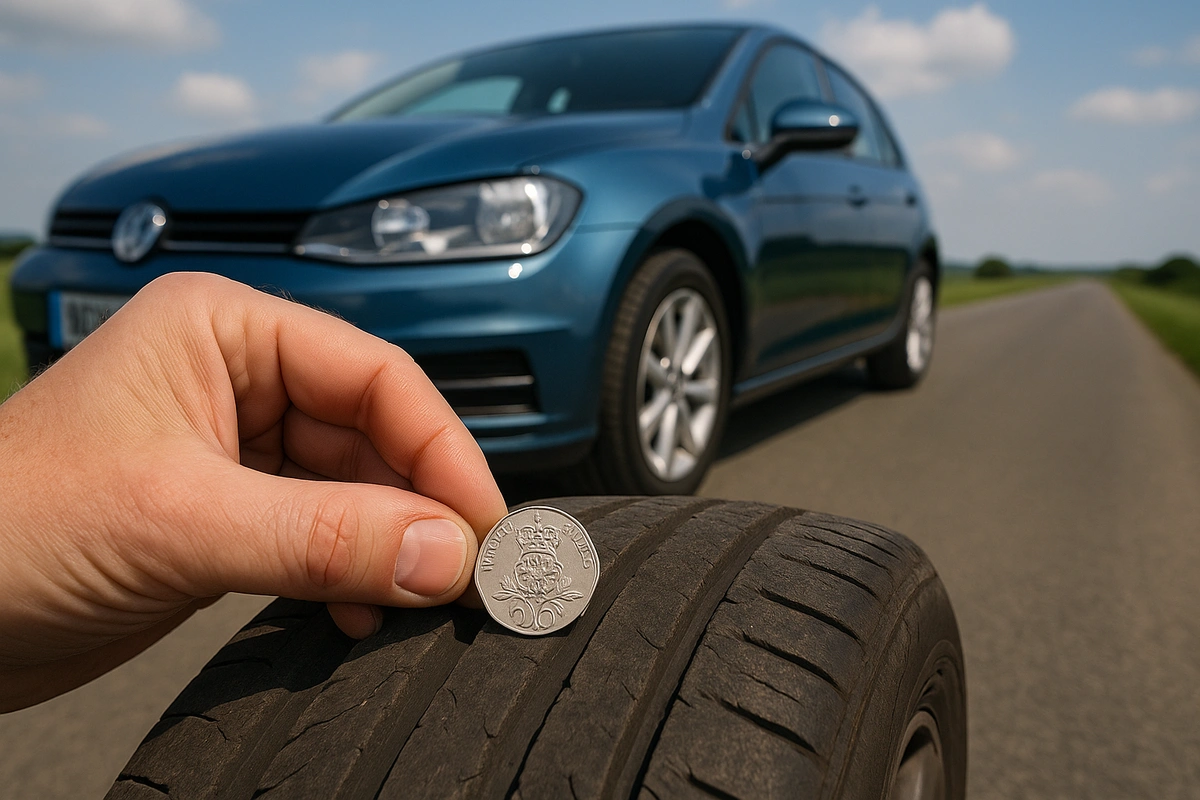
The 20p test uses a 20 pence coin inserted into the tread grooves to signal when depth approaches the legal limit, simplifying DIY checks. Follow these steps:
-
Insert the 20p coin into the main central groove.
-
If you see the outer rim of the coin, tread is below 1.6 mm.
-
Repeat around the tyre’s circumference and across its width.
Regular 20p tests spot thinning tread early and prepare you for wear indicator inspection.
What Are Tyre Wear Indicators and How Do They Help?
Tyre wear indicators are raised bars moulded into grooves at intervals around the tyre; they become flush with the tread at the legal limit, showing when depth hits 1.6 mm.
-
They require no tools and work across all tyre positions
-
They highlight uneven wear that a simple coin test might miss
-
They guide professional checks before booking replacement
Knowing these markers leads naturally to spotting visual damage patterns next.
What Visual Signs Show That Tyres Are Worn or Damaged?
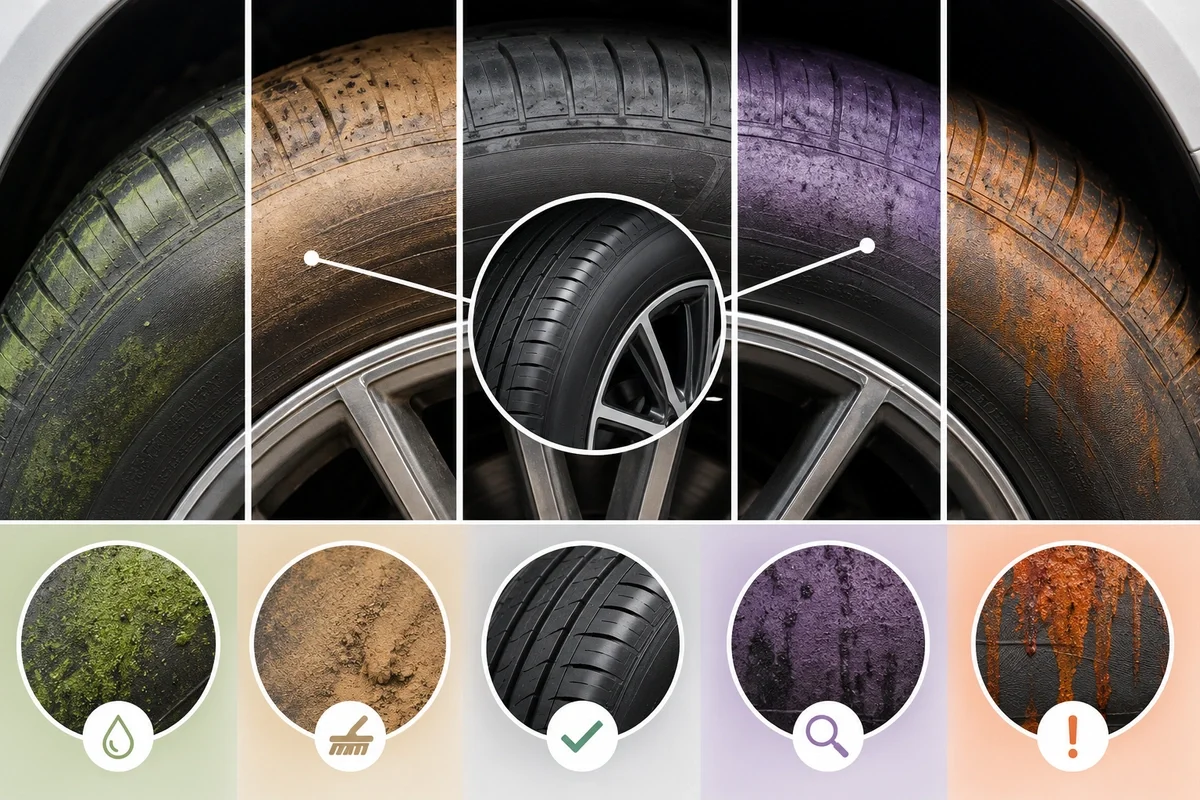
Visual tyre damage spans uneven tread patterns, sidewall cracks, bulges and punctures, each undermining load support and grip. Early recognition of these warning signs prevents blowouts, poor handling and expensive repairs by prompting timely tyre inspection or replacement.
How to Identify Uneven Tyre Wear Patterns and Their Causes?
Uneven tyre wear manifests as bald patches on the centre, shoulders or cupped hollows. Common causes include:
-
Centre wear from over-inflation reducing contact patch
-
Shoulder wear from under-inflation stressing edges
-
Cupping (scalloped dips) from suspension or balancing faults
-
Feathering (smooth edge on one side) from misalignment
Spotting these patterns indicates alignment, pressure or suspension checks are due before full tyre replacement.
What Do Sidewall Cracks and Dry Rot Mean for Tyre Safety?
Sidewall cracks and dry rot appear as hairline fissures in the rubber, signaling ozone and UV degradation over time. They weaken structural layers and raise blowout risk under load, making affected tyres unsafe and in need of immediate replacement to preserve roadworthiness.
Why Are Bulges, Blisters, and Lumps Dangerous?
Bulges, blisters or lumps on the sidewall or shoulder indicate internal cord separation or belt failure. These weak points can burst suddenly at speed, causing loss of control. Any visible bulge demands immediate tyre removal and professional replacement to ensure structural integrity.
How to Spot Punctures and Embedded Objects in Tyres?
Punctures and debris can slowly deflate a tyre or trigger rapid air loss. To inspect:
-
Visually scan tread and sidewalls for nails, screws or glass
-
Press around a suspected area to detect hissing
-
Use soapy water spray to reveal bubbling leaks
Identifying embedded objects early prevents sudden flats and supports safe driving.
How Do Worn Tyres Affect Vehicle Performance and Safety?
Worn tyres reduce traction, lengthen braking distances and heighten aquaplaning risk, compromising handling and stability. As tread depth falls, vehicle control in wet or emergency manoeuvres deteriorates, stressing braking systems and suspension components and endangering occupants.
How Does Tyre Wear Increase Braking Distances in Wet Conditions?
Tyre wear increases wet braking distances by up to 44 percent when tread drops from 3 mm to the 1.6 mm legal limit, because shallower grooves can’t disperse water effectively. This degradation directly impairs stopping power and elevates collision risk on damp roads.
What Is Aquaplaning and How Do Worn Tyres Increase Its Risk?
Aquaplaning occurs when water builds under the tyre and lifts it off the road surface; worn tread depth reduces the volume of water channelling away, making skids far more likely and vehicle control virtually impossible at speed.
Why Do Worn Tyres Cause Vibration and Unusual Noise?
Vibration or rumbling noise often arises from uneven wear or internal structural damage disrupting tyre balance. Such symptoms signal compromised integrity that affects ride comfort and steering precision, pointing to the need for inspection or replacement.
When Should Tyres Be Replaced Based on Age and Usage?
Tyre age and mileage both erode rubber elasticity and structural strength, even if tread depth appears sufficient. Thermal cycling, ozone and UV exposure lead to hardening and cracking over time, so age alone can render tyres unsafe well before visible wear demands replacement.
Tyre Age and Safety
Tyres degrade over time due to factors such as UV exposure and oxidation, even if the tread depth appears sufficient. It is recommended that tyres are professionally inspected after five years and replaced after ten years, regardless of tread depth.
This citation supports the article's advice on the importance of considering tyre age as a factor in replacement decisions.
How to Decode Your Tyre’s Manufacturing Date (DOT Code)?
Tyres display a four-digit DOT code: the first two digits show the production week and the last two digits the year. For example, means week 23 of 2019. Reading this code lets you track age against recommended service intervals and plan timely replacement.
What Is the Recommended Tyre Lifespan and Replacement Interval?
Manufacturers and safety experts advise professional inspection at five years of age and replacement by ten years, regardless of tread. Average mileage guidelines span 20,000–40,000 miles before wear thresholds.
| Tyre Age (Years) | Recommended Action |
|---|---|
| < 5 | Regular checks only |
| 5–10 | Professional inspection |
| > 10 | Replace regardless of tread |
Adhering to these intervals prevents age-related failures and reinforces safe handling.
What Are the Legal and Safety Risks of Driving on Worn Tyres?
Driving on worn tyres breaches UK law and heightens collision risk, voiding insurance cover in the event of an accident. Maintaining legal tread levels and sound structures protects you from prosecution and underpins overall road safety.
What Penalties Can You Face for Illegal Tyres in the UK?
Illegal tyres can incur fines up to £2,500 per tyre and three penalty points on your licence. Enforcement officers and MOT testers strictly check tread depth and tyre condition, making compliance essential to avoid severe financial and legal repercussions.
How Does Driving on Worn Tyres Affect Road and Vehicle Safety?
Worn tyres diminish grip, extend stopping distances and increase hazard susceptibility, undermining both individual and public safety. Immediate tyre replacement preserves handling, reduces accident potential and aligns with legal and insurance requirements.
Regularly checking these 10 signs ensures you stay ahead of wear and avoid costly penalties or dangerous scenarios. If any warning appears, you can book your mobile tyre fitting online with Tyre Runner to restore safe grip and confidence on every journey.