Aquaplaning: What It Is & How to Prevent It
With the weather taking a turn for the wetter, it’s high time we talked about something that affects every road user in the UK- aquaplaning.
Whether you call it aquaplaning or hydroplaning, it’s one of the most common causes of lost control in wet conditions, and the good news is that it’s largely preventable. Here’s everything you need to know to stay safe when the heavens open.
What Is Aquaplaning?
Aquaplaning (known as hydroplaning in some parts of the world) is what happens when your car turns into an unwilling water skier. As your tyres meet more water than they can push away, a thin layer of water builds up between the rubber and the road surface. Your tyres life off the tarmac, lose contact, and- just like that- you lose traction and steering control. Imagine trying to steer a hocky puck across ice: that’s roughly how much grip you have when a car aquaplanes.
The moment it happens, your steering can feel light and vague, your engine may rev as the wheels spin freely, and the car might start to drift. It’s unnerving but understanding what’s going on is the first step to preventing it.
What Causes Aquaplaning?
Aquaplaning isn’t random- it comes down to a few clear factors, and most of them are within your control:
- Water depth on the road. Standing water, flooded dips, and heavy downpours give your tyres more water than they can clear.
- Your Speed. The faster you drive, the less time your tyres have channel water away. Aquaplaning becomes a genuine risk in standing water at surprisingly ordinary speeds.
- Tyre tread depth. Tread grooves exist specifically to pump water out from under the tyre. Shallow tread means poor water dispersal.
- Tyre pressure. Incorrectly inflated tyres change the shape of the contact patch and how effectively they grip and clear water.
- Tyre design. Some tyres are engineered with wet-weather performance in mind; other simply aren’t.
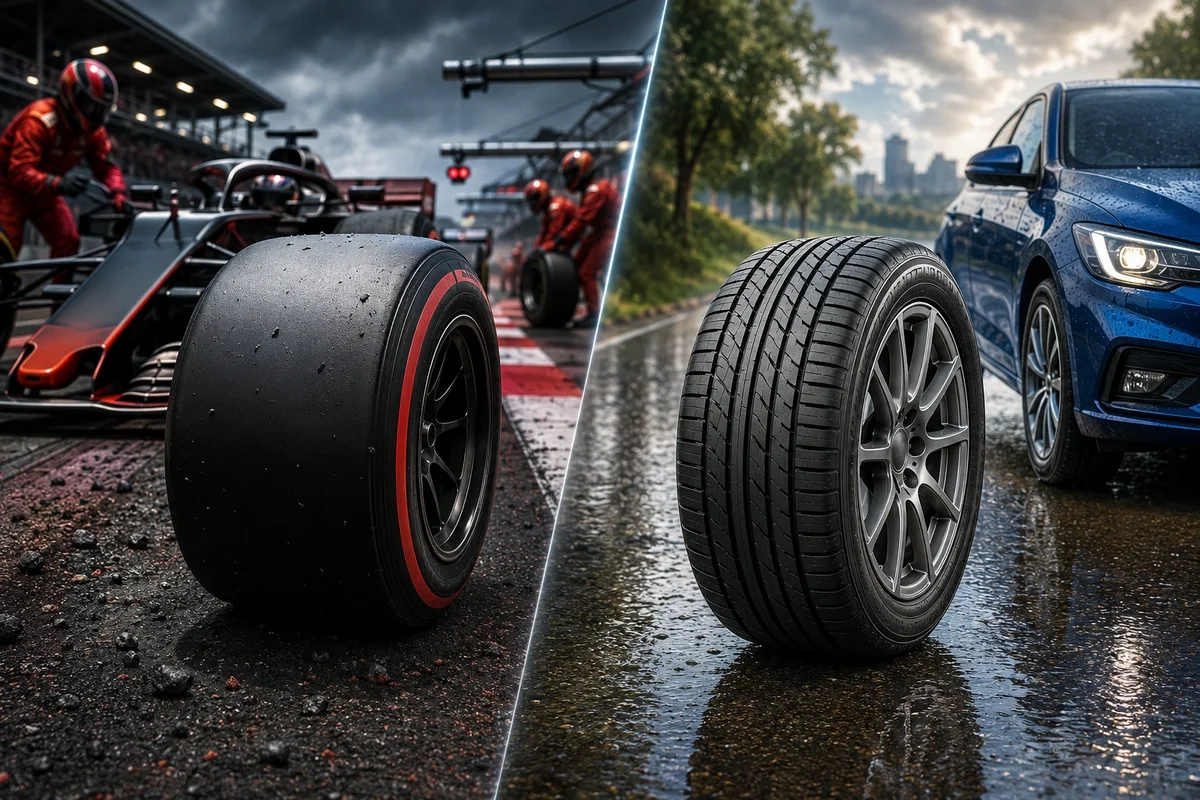
Did you know: most road tyres can disperse up to around 30 litres of water per second. Wet F1 tyres can disperse more than double that in a single second.
Why You Should Care About Aquaplaning
We all just want to get from A to B safely. Understanding and preventing aquaplaning is key to keeping you, your passengers, and other road users safe during heavy rain. A car that’s aquaplaning can’t be steered or braked in the usual way, so a few seconds of lost control at speed can have serious consequences. Knowing how to avoid it- and how to react if it happens- is genuinely half the battle won.
How to Prevent Aquaplaning: 4 Essential Tyre Tips
1. Check Your Tread Depth
Worn tyres are aquaplaning’s best friend. The deeper the tread, the more water your tyres can shift. In the UK, the legal minimum tread depth is 1.6mm across the central three-quarters of the tyre, but many safety experts recommend considering replacements at around 3mm- well before you hit the legal limit.
A quick way to check: pop a 20p coin into the main tread grooves. If the outer band of the coin is visible, your tread may be too low and it’s worth getting the tyres inspected.
2. Keep Your Tyre Pressure Correct
Properly inflated tyres do their best work. Both over- and under- inflated tyres change how the rubber meets the road and how well it disperses water. Check your pressures at least once a month (and before long journeys) against the figures in your vehicle handbook or the sticker inside the driver’s door.
3. Slow Down in the Wet
Slow and steady wins the race, especially in the rain. The faster you go, the harder it is for your tyres to clear water- so ease off the accelerator when the roads are wet and leave extra stopping distance between you and the car ahead.
4. Avoid Standing Water Where You Can
It seems obvious, but those pesky puddles aren’t always avoidable. Where it’s safe to do so, steer around standing water and flooded patches- treat each one as a potential mini-lake ready to lift your tyres off the road.
What to Do If Your Car Aquaplanes
Even careful drivers can get caught out, so it pays to know how to react:
- Don’t panic and don’t slam the breaks. Hard braking can make things worse and send you into a skid.
- Ease off the accelerator. Gently lifting off lets the cat slow naturally and helps your tyres regain contact.
- Keep the steering steady. Hold the wheel straight and avoid sudden movements until you feel grip return.
- Wait for traction to come back, then continue at a reduced, sensible speed.
The key is calm, gentle inputs- no dramatic steering, braking, or acceleration.
Choosing the Right Tyres for Wet Weather
Not all tyres are created equal. Some are specifically designed to disperse water and hold grip in wet conditions far better than others, thanks to their tread patterns, rubber compounds, and wet-braking performance. If you regularly drive in typical UK weather, choosing tyres that perform well in the wet is one of the smartest safety upgrades you can make.
At Tyre Runner, we believe in the marvel of modern tyre technology- and in independent, jargon-free advice. We can help you compare tyres from major UK retailers and fitters and guid you to the right choice for rainy roads, without pushing a particular brand.
Aquaplaning FAQs
At what speed does aquaplaning happen? There’s no single magic number, because it depends on water depth, tyre condition, and vehicle weight. As a rule, the rises sharply in standing water at motorways speeds- but worn tyres can aquaplane at much lower speeds. The safest approach is to slow down whenever the road is wet.
Does tyre tread really prevent aquaplaning? Yes. Tread grooves are designed to channel water out from beneath the tyre. The shallower your tread, the less water it can clear- which is why keeping a healthy tread depth is one of the most effective defences against aquaplaning.
Is aquaplaning the same as hydroplaning? They’re two names for the same thing. “Aquaplaning” is the common term in the UK, while “hydroplaning” is used more widely in the US.
Drive Confidently, Whatever the Weather
Next time the heavens open, remember you’ve got this. With the right knowledge and the right tyres, you can navigate wet roads with confidence. And if you ever feel unsure bout your tyres, we’re here to help- no jargon, just good, honest tyre talk.