Tyres that are under or over-inflated can silently compromise your car's safety, speed up wear and tear on components, and inflate your running costs. Understanding how incorrect tyre pressure affects your car's lifespan and how it handles puts you in a better position to protect your investment and your passengers.
This guide will walk you through the ideal inflation level, explore the risks associated with both under and over-inflation, offer a maintenance plan to make your tyres last longer, examine the broader impacts on your vehicle, address common worries, and show you how TyreRunner.com can support your tyre pressure needs.
What's the Sweet Spot for Your Vehicle's Tyre Pressure?
The perfect tyre pressure is the exact cold inflation setting that strikes a balance between tyre wear, grip, and how much fuel you use. Your car manufacturer specifies this in PSI (pounds per square inch) or bar to ensure the tyre makes even contact with the road. Sticking to this recommendation helps your tyres last longer, makes steering more responsive, and reduces rolling resistance.
How Do We Pinpoint and Measure the Ideal Tyre Pressure?
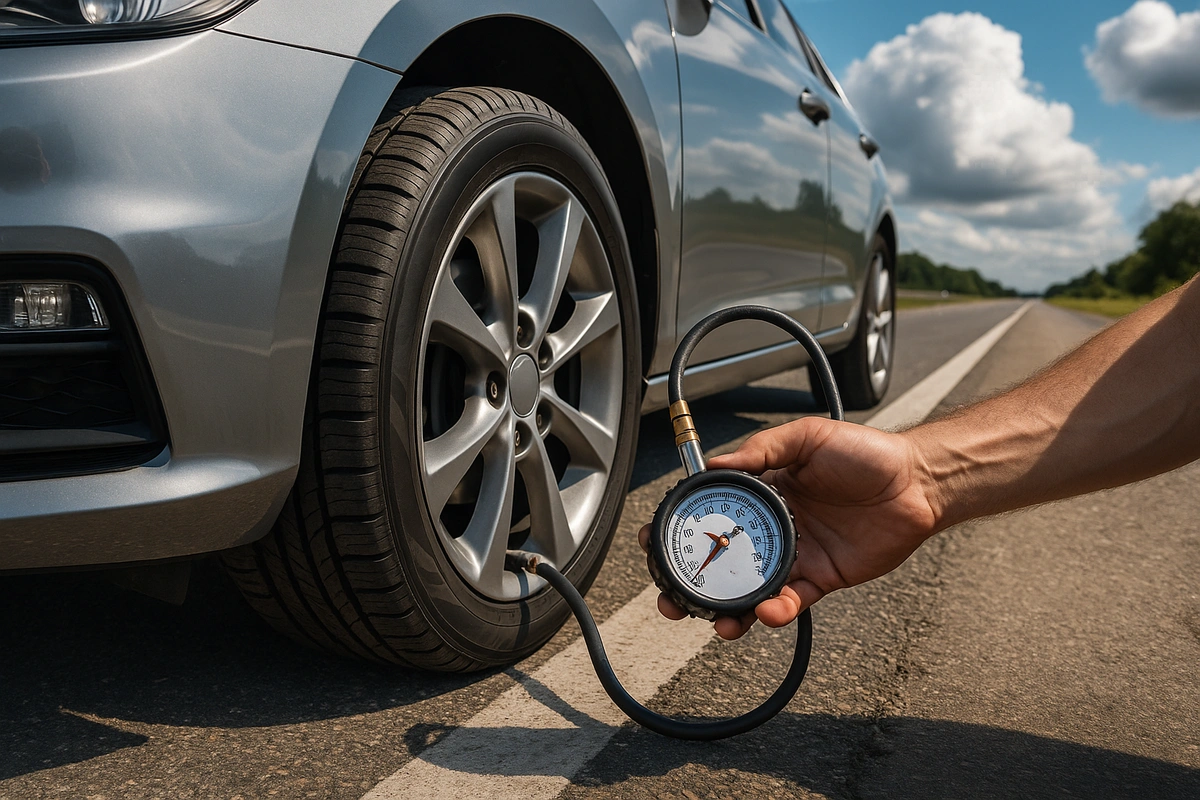
Manufacturers provide a cold pressure p – measured before you start driving – because heat naturally increases internal pressure. Tyre pressure gauges, whether they're dial or digital, help you get this reading. A cold reading, for instance, of 32 PSI (2.2 bar) ensures the tyre operates within its designed load index and tread flexibility limits.
Where Can You Track Down Your Car's Recommended Tyre Pressure?
You'll find the recommended PSI/bar on:
-
The sticker on your driver's door, which usually lists front and rear pressures.
-
Your car's owner's manual, typically under a "Tyre Information" section.
-
Online databases from the manufacturer, where you can search by make, model, and year.
Confirming this number means you're not guessing and ensures your tyre pressure is aligned with your car's load and suspension setup.
What Makes Tyre Pressure Change?
Changes in the outside temperature can affect pressure by about 1 PSI for every 10 °F shift. If you're carrying heavy loads or have roof racks, this increases the strain and might mean you need to pump up your tyres a bit more. Driving at high speeds for extended periods also heats up the tyres, temporarily increasing pressure before it settles back to the ambient level.
How Does a Tyre Pressure Monitoring System (TPMS) Work, and What Are the Perks?
A TPMS uses sensors to keep an eye on your tyre pressure in real time and will warn you if the pressure drops by more than about 25%. Beyond safety alerts, TPMS helps you save on fuel and stops you from needing to replace tyres too soon by making sure you fix the pressure before any damage occurs.
The Risks of Driving on Tyres That Are Too Soft
Tyres that are under-inflated flex too much, which builds up heat and causes wear on the shoulders, weakens the sidewalls, and can lead to permanent damage. When the tread loses its stiffness, it increases rolling resistance, which burns more fuel and puts extra strain on your suspension components.
How Does Under-Inflation Lead to Tyres Wearing Out Faster and Getting Damaged?
When the pressure drops below the recommended level, the outer edges of the tread have to carry more weight. This results in shoulder wear and sidewall stress, weakening the tyre's structure. The heat generated can break down the rubber compounds and cause the internal belts to separate prematurely.
In What Ways Does Under-Inflation Make Your Car Less Fuel-Efficient?
Lower pressure means more rolling resistance. Studies suggest that for every 1 PSI of under-inflation, you can expect a 0.3% decrease in fuel economy. Over the course of a year, this can add up to a significant amount in extra fuel costs and unnecessary CO₂ emissions.
How Does Tyre Pressure Affect Your Fuel Consumption?
Research from the National Highway Traffic Safety Administration (NHTSA) in the US found that a 1% drop in tyre pressure corresponds to a 0.3% reduction in fuel economy. This clearly shows how under-inflation increases rolling resistance and, consequently, fuel usage. This finding directly backs up the article's point about the specific percentage decrease in fuel economy caused by under-inflated tyres.
How Does Under-Inflation Mess with Your Car's Handling and Braking?
Under-inflated tyres deform when you're cornering, reducing the size of the contact patch and lessening your grip. This leads to longer braking distances and makes steering feel unpredictable, especially on wet or slippery surfaces.
What's the Increased Chance of Tyre Blowouts and Accidents with Under-Inflated Tyres?
Excessive heat and weakened sidewalls make a blowout at speed much more likely. Blowouts are a major cause of tyre-related road incidents, risking a loss of control and potential collisions.
Soft and Worn Tyres Raise the Risk of Car Accidents
A 2012 study by the National Highway Traffic Safety Administration (NHTSA) indicated that vehicles with tyres under-inflated by over 25% are three times more likely to be involved in tyre-related accidents. Tyre issues contribute to around 11,000 road incidents annually in the US. This citation confirms the article's claims about the heightened risk of blowouts and accidents linked to under-inflated tyres.
How Does Under-Inflation Impact Your Suspension and Steering Parts?
When tyres have to absorb more flexing, shocks and vibrations are sent through to the suspension arms and steering linkages. This speeds up wear on ball joints, tie rods, and bushings, cutting short their lifespan and leading to pricier repairs.
The Dangers of Driving on Tyres That Are Too Hard
Over-inflation causes the centre of the tread to bear too much weight, shrinks the contact patch, and results in a rougher ride. Being more susceptible to punctures and having less grip creates safety risks and shortens the life of your tyres.
How Does Over-Inflation Lead to Uneven Tyre Wear and a Shorter Tyre Life?
Excess pressure forces the load onto the central tread ribs, causing centre wear and rapidly reducing the tread depth. The smaller contact patch also increases rubber abrasion during hard braking.
How Tyre Pressure Affects Tyre Wear
Incorrect tyre pressure significantly impacts how long your tyres last and how they wear. Under-inflation causes faster wear on the outer edges or shoulders of the tyre, while over-inflation leads to concentrated wear in the centre of the tread, reducing the tyre's overall lifespan. This information supports the article's explanation of how both under- and over-inflation contribute to uneven tyre wear and a reduced tyre lifespan.
Why Does Over-Inflation Make for a Bumpy Ride and Less Comfort?
A tyre that's too stiff can't absorb road shocks as well, sending bumps and vibrations straight into the car's cabin. This cuts down on passenger comfort and can hide tyre damage until it becomes serious.
How Does Over-Inflation Make Tyres More Vulnerable to Road Hazards?
A tyre that's too rigid can't flex around potholes or debris, making it more likely to get cuts, damage its internal structure, or puncture when hitting sharp objects.
What Are the Effects of Over-Inflation on Grip and Braking?
A smaller contact area with the road reduces both lateral (cornering) and longitudinal (braking) traction. Over-inflated tyres need more distance to stop and offer less stability when cornering, particularly in wet conditions.
How Does Over-Inflation Put Strain on Suspension and Steering Systems?
Hard impacts from rigid tyres put stress on suspension springs, shock absorbers, and steering joints, leading to premature wear and potential misalignment, which harms ride quality and tyre life.
How Can Regular Tyre Care Help Your Tyres and Car Last Longer?
Consistent checks and adjustments of tyre pressure, combined with sensible driving habits and timely professional inspections, help maintain your tyres' condition, protect suspension parts, and improve fuel efficiency.
How Often Should You Check and Adjust Your Tyre Pressure?
Check your tyre pressure at least once a month and before any long journeys. Always measure when the tyres are cold – meaning you've driven less than 2 miles – to get an accurate reading.
What Tools and Methods Ensure Accurate Tyre Pressure Checks?
A calibrated digital gauge typically offers an accuracy of ±1 PSI. Use your TPMS alerts as an initial warning, but always double-check the readings manually to account for any potential sensor inaccuracies.
What Are the Signs That Tell You It's Time to Replace Your Tyres?
Look out for tread depth below 1.6 mm, visible tyre cords, bulges, cuts, or uneven wear patterns. Tread wear indicators and manufacturer guidelines can help you decide when replacement is necessary.
How Do Your Driving Habits Affect Tyre Health and Your Car's Longevity?
Driving at moderate speeds, taking corners smoothly, and avoiding overloading your vehicle reduces heat and mechanical stress on the tyres. Gently steering around potholes and obstacles helps prevent damage to the tyre structure.
When Should You Get Professional Tyre Services and Inspections?
If you notice vibrations, your car pulling to one side, or a persistent loss of pressure, it's time to see a tyre specialist. An annual check of your wheel alignment, balancing, and pressure calibration will keep your tyres and steering components in top condition.
How Does Incorrect Tyre Pressure Affect Your Car's Overall Performance and Safety?
Keeping your tyres at the correct pressure helps maintain fuel economy, precise handling, suspension integrity, and accident prevention, all contributing to lower running costs and improved road safety.
In What Ways Does Tyre Pressure Impact Fuel Economy and Emissions?
The right tyre pressure minimises rolling resistance, saving you up to 3% on fuel and reducing CO₂ emissions. Incorrect pressure increases your carbon footprint and inflates your fuel bills.
How Does Tyre Pressure Influence Your Car's Handling and Stability?
Properly inflated tyres maintain their designed contact patch with the road, ensuring predictable steering, balanced cornering, and reliable braking performance in various conditions.
What Are the Long-Term Effects of Incorrect Tyre Pressure on Suspension and Steering Lifespan?
Excessive flexing or stiffness in tyres sends abnormal forces to suspension struts, anti-roll bars, and tie rods, shortening their lifespan and leading to more frequent and costly maintenance.
How Does Maintaining Correct Tyre Pressure Reduce the Risk of Accidents?
Consistent traction and precise steering control minimise situations where you might lose control of the vehicle. Statistics show a significant drop in tyre-related accidents when drivers follow the manufacturer's recommended inflation guidelines.
Common Questions About Tyre Pressure and Safety
Drivers often wonder which type of pressure error is more dangerous, how quickly pressure tends to drop, and how to spot early warning signs. Understanding the risks of under-inflation – like excessive wear, heat build-up, and the danger of blowouts – and over-inflation – such as reduced grip, a harsh ride, and vulnerability to punctures – makes it clear why monthly cold checks are so important. Visual clues like uneven tread wear, bulges, or vibrations can signal pressure problems and potential safety hazards.
How Can TyreRunner.com Help You Keep Your Tyre Pressure Correct and Your Car Lasting Longer?
As a trusted tyre specialist in the UK, TyreRunner.com provides expert advice and practical tools to ensure your tyres are always in peak condition.
What Tyre Care Advice and Educational Resources Are Available?
Explore our blog for UK-specific pressure charts, tips for seasonal inflation adjustments, and in-depth information on TPMS technology to help you make informed maintenance choices.
Where Can You Find Local Tyre Services and Support?
Find accredited TyreRunner.com service centres throughout the UK for convenient tyre fitting. Every partner meets our stringent quality and safety standards.
Drive with peace of mind by keeping your tyres correctly inflated. Regular checks and professional support from TyreRunner.com will extend your tyre life, protect your suspension, and maintain braking performance, ensuring every journey is as safe and economical as possible.