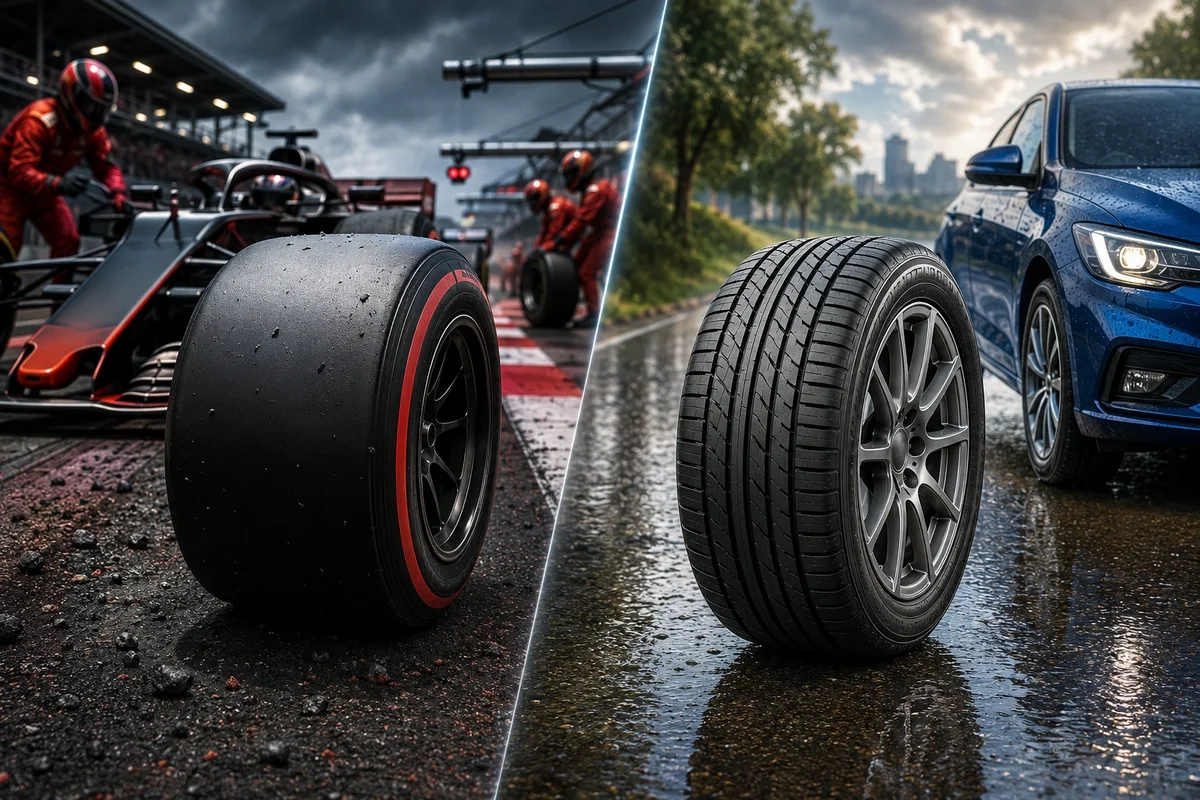
F1 Tyres vs Road Tyres: What’s the Difference?
A typical road tyre can last up to 40,000 miles. An F1 tyre may struggle to reach 100 miles before its performance starts to drop.
Despite both being made from composite rubber and serving the same purpose, F1 tyres and road tyres are engineered for completely different jobs. While road tyres are designed for durability, comfort, fuel efficiency and safety, F1 tyres are built for one main thing: performance to the highest level.
How Much Do F1 Tyres Cost?
F1 is known for being one of the most technologically advanced and expensive sports in the world, and its tyres are no exception.
An individual F1 tyre can cost around £2,000 meaning a full set is worth approximately £8,000. Across a 24-race season, with 22 different cars, each using up to 13 sets of tyres per race weekend the estimated value of tyres is roughly £54,912,000 each season, not including preseason testing.
In comparison, road tyres can cost anywhere between £50-450+ depending on a variety of different factors and manufacturers.
How Long Do They Last?
F1 tyres are designed to last only a fraction of the distance covered by road tyres. Depending on the compound and circuit, a set may only be used for between 10 and 50 laps before performance drops significantly. F1 tyres are intentionally designed to prioritise grip and performance over longevity, meaning they wear much faster than road tyres.
Road tyres however, last anywhere between 20,000-40,000 miles depending on a variety of factors such as road and weather conditions, driving style and how well they’re looked after.
How Do They Perform in Wet Conditions?
In Formula 1 there are a variety of different tyre types which are designed to do all different things.
The ‘slick tyres’ are designed for dry weather, with a variety of different options within that category. However, there are also options for wet weather tyres; the intermediate tyres, designed for damp or drying tracks that aren’t quite dry enough for slicks, and full wets which are designed for… you guessed it… wet conditions.
- Slick tyres in wet weather will disperse little to no water when driving, it is very dangerous for f1 cars to be using slicks in wet conditions due to this as the tyres are unable to grip and cars can slide at high speeds.
- Intermediate tyres can disperse around 30 to 40 litres per second, which makes them suitable for damp track conditions. This is similar to the amount of water that road tyres can disperse while driving (although a regular car travels a much shorter distance in a singular second).
- Wet tyres can disperse up to 85 litres of water in a single second, meaning that F1 cars are able to grip in wet conditions while driving at high speeds, making their speeds much slower than normal yet keeping them from sliding off the track.
G-Forces and Braking
One of the biggest differences between F1 tyres and road tyres is the amount of force that they have to withstand.
During heavy braking and cornering, Formula 1 drivers can experience forces of up to 5G, placing enormous loads on the tyres.
Whereas, when driving on the road and completing an emergency stop only a force of around 0.8G and 1.2G can be felt. Meaning that the tyres must cope with a much smaller amount of stress.
Can I put F1 Tyres on My Car?
In theory, yes- but in reality, you wouldn't want to.
F1 tyres need to operate within a specific temperature range to provide maximum grip. This is why tyres are pre-heated before use and why engineers and mechanics can be seen running around the garages with tyres in blankets. The cars are then able to maintain this heat throughout the race.
Road cars simply cannot generate or maintain these temperatures in the same way. As a result, an F1 tyre fitted to a road car would struggle to reach it's ideal operating conditions and would likely perform worse than a conventional road tyre. If only there was a place for you to find suitable tyres for your vehicle… tyrerunner.com.
F1 tyres are also designed for smooth racing circuits rather than potholes, speed bumps and everyday road surfaces. Their construction prioritises outright performance over comfort, durability and all-weather usability, making them unsuitable for daily driving.
The Verdict- What’s the Difference?
Although both Formula 1 and road tyres may look similar, they have many differences which make them the best for their individual jobs.
Road tyres are made to be durable, deal with different conditions and surfaces while providing comfort and safety compared to F1 tyres which are made to be fast, lightweight and go short distances to make for a more thrilling race.
While F1 tyres are among some of the most advanced tyres ever produced, they wouldn’t last very long on your daily commute. That’s why choosing the right tyre is just as important for everyday driving as choosing the right tyre type for an F1 team on race day.