Hankook EV Tyres: A Complete Guide to the iON Range
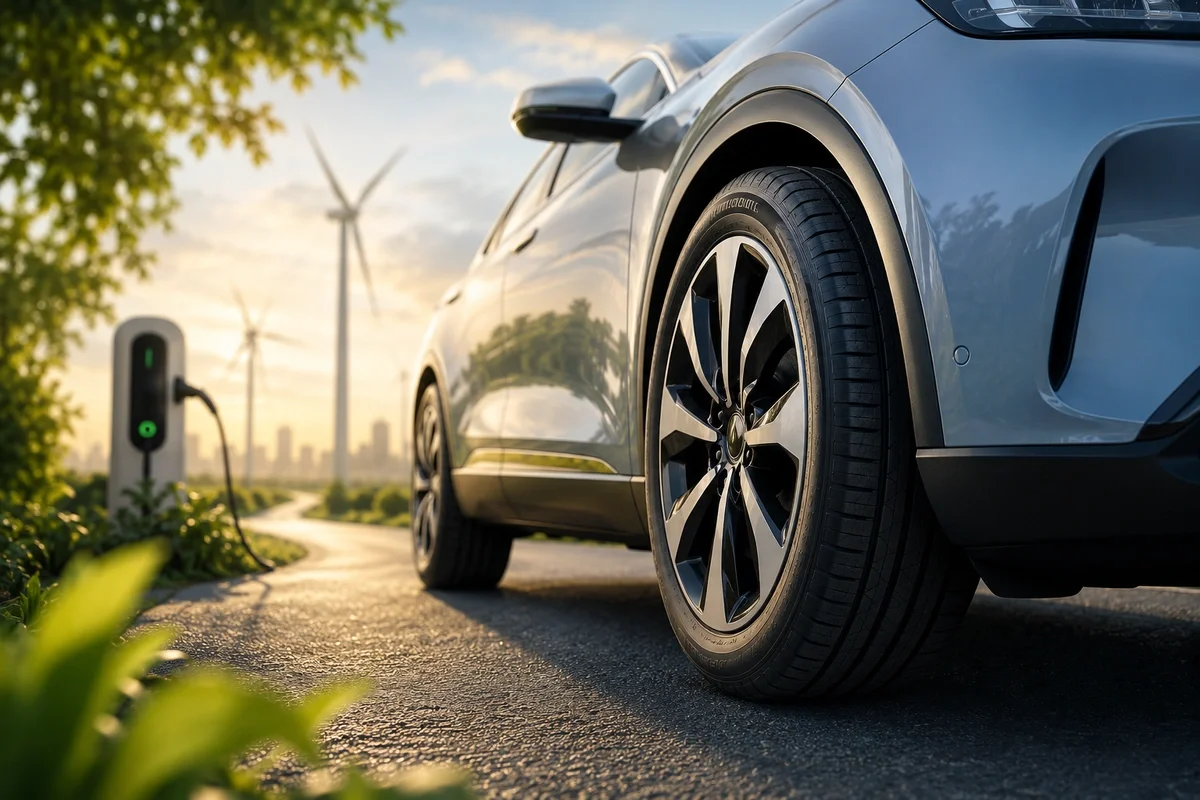
Electric cars are quitter, heavier and quicker off the line than the petrol and diesel cars they’re replacing- and that changes what you should expect from your tyres. Hankook was one of the first major manufacturers to build a tyre range exclusively for EVs rather than adapting an existing pattern. That range is called iON, and this guide breaks down what’s in it, how the models differ, and how to work out which one fits your electric car.
At Tyre Runner we don’t sell one brand over another. The aim here is simple: give you the facts so you can make a confident, informed choice.
Why do EV tyres exist?
An EV asks more of its tyres than a comparable combustion car for three main reasons.
Weight. An EV has no engine, gearbox, exhaust, or fuel tank, but its battery pack usually more than makes up for what’s been removed. The result is that most electric cars still weigh somewhat more than the equivalent petrol model- and that extra load goes through the tyres, which can cause faster or more uneven wear on tyres that weren’t designed for it.
Instant torque. Electric motors deliver full pulling power the moment you press the accelerator. That sudden force can chew through soft rubber quickly unless the compound and construction are built to handle it.
Range and noise. Every bit of energy a tyre wastes as rolling resistance is range you don’t get. And because there’s no engine noise to mask it, tyre roar is far more noticeable in an EV cabin, so low-noise design matters more than ever.
A goof tyre balances all of these: low rolling resistance for range, a tough compound for the weight and torque, and clever noise cancelling features for comfort. That’s exactly the brief Hankook set itself with the iON range.
What is the Hankook iON range?
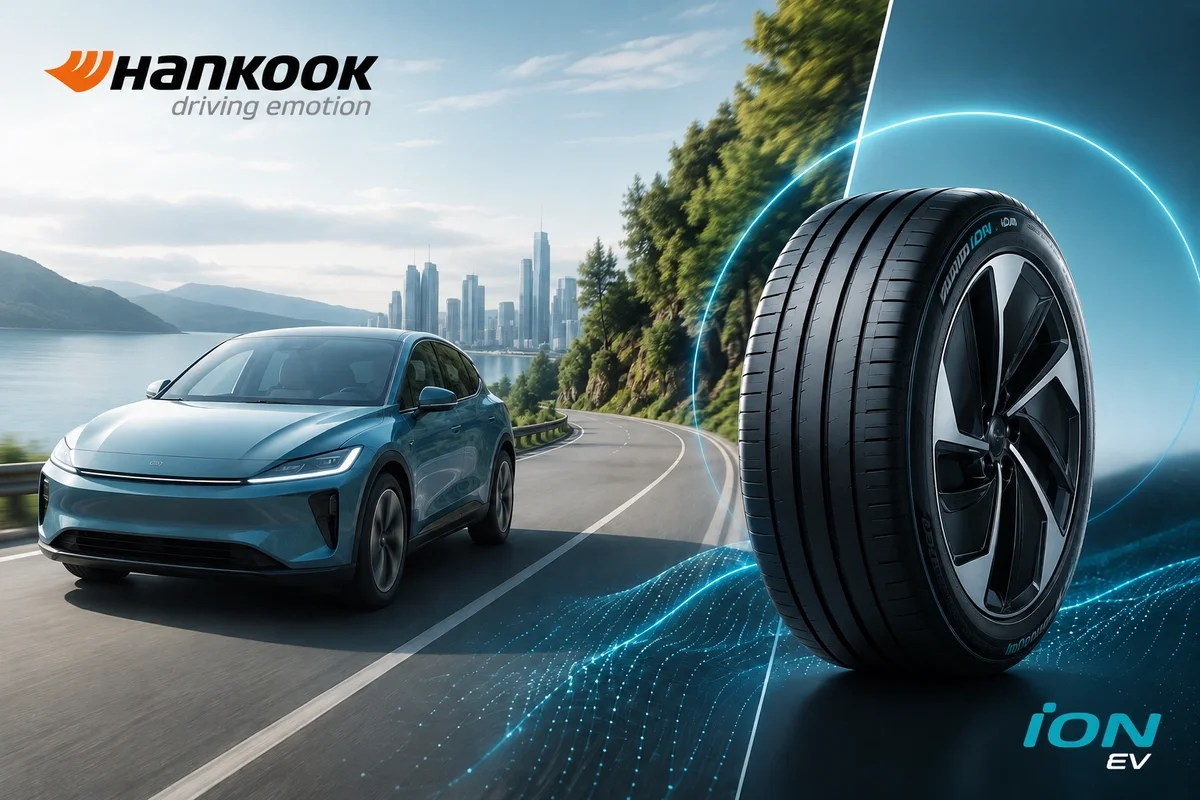
iON is Hankook’s EV-only tyre family. Rather than relabelling older patterns, Hankook developed these tyres from the ground up for the battery-electric and plug-in hybrid vehicles, using what it calls its “iON Innovative Technology” across the range.
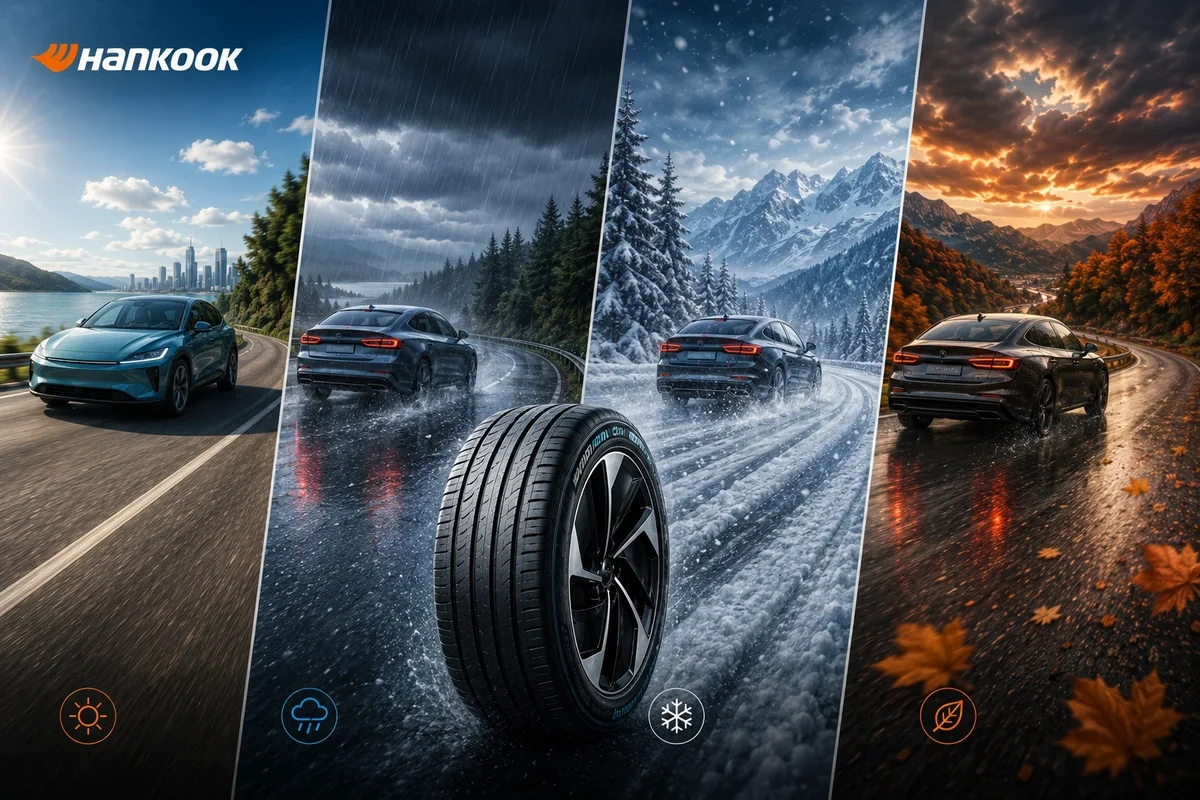
The line-up covers the main seasons and body styles, so there’s usually an iON tyre to match whatever you drive and wherever you drive it:
- iON evo- the summer/ all-round performance tyre for cars, and the range’s headline act.
- iON evo AS- the all-season option for UK driver who want one tyre for the whole year.
- iON i*cept- the winter tyre, for cold, wet and light-snow conditions.
- iON GT- a comfort and efficiency-focused touring tyre built around even, long-lasting wear.
- SUV versions- most models come in an SUV variant (for example the iON evo SUV) engineered for heavier crossovers and electric SUVs.
Because the naming can get confusing, the quickest way to check what fits your car is your tyre size- the sequence on the sidewalls such as 215/5 R18.
The iON models explained
Hankook iON evo (summer)
Th iON evo is the tyre most people mean when they talk about Hankook EV tyres. It’s designed to deliver strong dry and wet grip while keeping rolling resistance low for range. It carries top-tier EU tyre-label scores in several sizes, and it has performed very well in independent testing- reviewers have praised its wet and dry braking, handling and comfort, with EV-specific range results near the top of its class.
Best for: drivers who want maximum grip and efficiency and don’t need dedicated winter performance.
Hankook iON evo AS (all-season)
The all-season iON evo AS is aimed squarely at UK drivers who’d rather not swap tyres twice a year. It uses a compound and trend designed to work across dry, wet, and mild winter conditions, including light snow, while still managing EV’s weight and torque. It won’t match a dedicated winter tyre in deep snow or ice, but for the typical British climate it’s a sensible one-tyre solution.
Best for: year-round driving without changing tyres seasonally.
Hankook iON i*cept (winter)
The iON i*cept is the cold-weather specialists, built for grip in low temperatures, rain, slush and snow. If you regularly drive in genuinely wintry conditions, a dedicated winter tyre like this will out-perform an all-season, and the EV-specific construction keeps range and noise in check.
Best for: drivers facing real winters or those who run a summer/winter tyre set.
Hankook iON GT
The iON GT leans towards comfort, quietness and even wear. Hankook highlights its “Round Even” and “Opti Tread” technologies, which are designed to keep contact pressure uniform across the tyre- a different response to the tendency of EVs to wear tyres unevenly. The payoff is longer life and less frequent replacement.
Best for: drivers who prioritise a smooth, quiet ride and long tyre life.
SUV variants
Electric SUVs and crossovers are heavier still, so Hankook offers SUV-specific versions (such as the iON evo SUV and iON evo AS SUV) with tougher construction for the extra load, while keeping the same focus on range, grip and low noise.
Best for: electric SUVs, crossovers and larger EVs.
The technology behind iON tyres, in plain English.
Hankook uses a lot of trademarked names, but the ideas are straightforward:
- Low-rolling resistance compound- a silica-heavy, eco-focused rubber mix that reduces energy loss to help protect your range.
- Reinforced construction- stiffer sidewalls and aramid reinforcement belts help the tyre cope with the battery weight and instant torque without deforming or wearing unevenly.
- Noise- reducing foam and tread turning- a sound-absorbing foam layer inside the tyre, plus carefully varied tread blocks, cut the cabin noise that so obvious in a silent EV.
- Even-wear technology- features that keep contact pressure uniform to slow the uneven wear EVs are prone to, extending tyre life.
You’ll also find iON DNA at the very top of the sport: Hankook is the exclusive supplier to the AAB Formula E WORLD Championship, so the range’s engineering is tested at the sharp end of electric racing.
Compare Hankook EV tyres with Tyre Runner
Hankook’s iON range is one the strongest EV-specific line-ups on the market – but it’s still worth checking it against the alternatives for your exact car and budget. Enter your registration or tyre size on Tyre Runner to compare prices, retailers and fitting options across the UK, and find the right EV tyre without the guesswork.
Frequently asked questions
Can I fit Hankook iON tyres to a petrol or diesel car? They’re optimised for EVs and plug-in hybrids, but the size and speed/load ratings are what determine fitment. That said, you’ll get the most from EV-specific features on an electric car; on a combustion car a standard tyre may be a better-value match.
Do EV tyres really improve range? Lower rolling resistance reduces the energy your car wastes overcoming tyre drag, which can help range. The gain varies by car, driving style and conditions, but it’s a genuine factor EV-specific tyres are designed around.
Are Hankook iON tyres noisy? The opposite- low noise is one of the range’s biggest strengths, thanks to sound-absorbing foam and turned tread patterns. Owners frequently rate them as noticeably quieter than non-EV tyres.
How long do Hankook iON tyres last? It depends on your car and driving, but independent testing has projected competitive tread life for the iON evo, helped by even-wear technology designed to counter the uneven wear EVs can cause.