Picture this: you're driving, and suddenly the heavens open, or you hit a patch of icy road. That moment your tyres lose their grip is a stark reminder of how rain and snow can impact both their traction and how long they last. Understanding these effects helps you pick the right tyres and keep them in top shape.
This guide will show you how rain can lead to aquaplaning, why snow and ice make your tyres slip, how temperature swings wear them out faster, which tyres are best for UK wet and snowy weather, how to check and care for your tyres, answers to common questions, and the clever tech that makes tyres safer. By the end, you'll be well-equipped to choose, check, and maintain tyres that keep you safe and last longer, no matter the weather.
How Rain Affects Tyre Grip and Increases Aquaplaning Risk
Rain reduces your tyre's grip by creating a thin layer of water between the tread and the road. This cuts down friction, making it harder to steer and brake safely, and significantly increases the risk of aquaplaning. If water can't escape the tread quickly enough, your tyres can lift off the road surface, losing contact and potentially doubling your stopping distance. Having the right tread pattern and keeping your tyres in good condition are key to channelling water away, keeping you safe in the wet and preventing premature wear.
What Causes Aquaplaning and How Can You Avoid It?
Aquaplaning happens when there's too much water for your tyre's tread to clear, leading to a complete loss of steering control. Driving too fast, having worn-out tyres, underinflated tyres, or encountering deep puddles all make this dangerous situation more likely by reducing the tyre's connection to the road.
Here’s how to stay safe:
-
Make sure your tread depth is well above the UK legal minimum of 1.6 mm to help disperse water effectively.
-
Keep your tyres inflated to the recommended pressure. This ensures the tyre's contact patch and water-clearing grooves work as designed.
-
Slow down in heavy rain and avoid sudden steering or braking to keep your tyres firmly on the road.
-
Look for tyres with wide grooves running around the circumference and high ratings for wet grip, which are designed to clear water efficiently.
By keeping your tyres properly inflated and ensuring they have enough tread, you'll maintain better traction and avoid dangerous water build-up.
Pneumatic Tyre Aquaplaning: an Experimental Investigation on Manifestations and Influences of Appearance
This study delved into the characteristics and factors influencing pneumatic tyre aquaplaning, examining tyre type, wear, inflation pressure, and water depth. The findings offer valuable insights for detecting and avoiding aquaplaning, which is vital for driver safety and the development of advanced driver assistance systems. This research directly backs up our explanation of how aquaplaning occurs, the factors that contribute to it like tyre pressure and wear, and why proper tyre maintenance is so important for staying safe in wet conditions.
How Does Tyre Tread Depth Affect Wet Grip and Water Dispersion?
The depth of your tyre's tread is crucial for wet grip because it determines how much water the grooves can channel away from the tyre's contact area. Deeper treads can move more water to the sides, preventing that slippery layer that causes hydroplaning and helping to maintain braking performance.
Which Tyre Types Perform Best in Heavy Rain?
Here’s a look at common tyre types and how they handle water:
| Tyre Type | Wet Grip Rating | Key Feature |
|---|---|---|
| Premium Wet Tyres | EU Wet Grip A | Extra-wide circumferential grooves |
| All-Season Tyres | EU Wet Grip B–C | Balanced siping and groove ratio |
| High-Performance Tyres | EU Wet Grip A–B | Special silica compounds for water adhesion |
Each tyre type manages water differently, but choosing a premium wet tyre generally offers the most reliable grip when it's raining.
How Does Tyre Pressure Affect Grip and Safety on Wet Roads?
Correct tyre pressure is essential for good wet traction. It ensures the tyre maintains its intended contact area with the road and keeps the tread grooves working effectively to disperse water. Underinflated tyres can flex too much, causing the grooves to fill with water, leading to increased heat and faster wear. Overinflated tyres have a smaller contact patch, which can affect stability. Always inflate your tyres to the vehicle manufacturer's recommended cold-inflation pressure for consistent water evacuation and stable handling in the rain, significantly reducing the risk of aquaplaning.
How Snow Impacts Tyre Grip and Traction in Winter Conditions
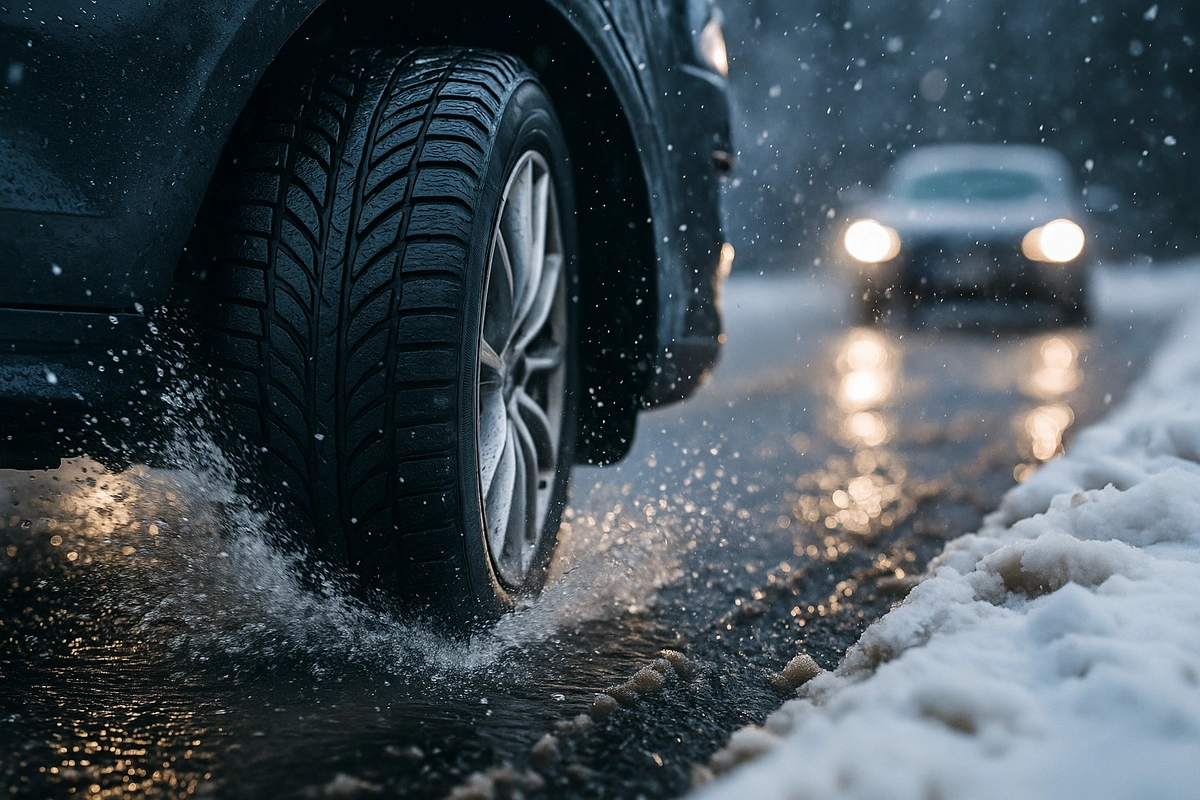
Snow makes it harder for tyres to grip because it can pack into the tread grooves, reducing the friction between the rubber and the road. This results in longer stopping distances and less responsive steering. Different types of snow, slush, and ice all affect traction differently, which is why tyres need to stay flexible in the cold and have designs that can bite into uneven surfaces.
Why Do Snow and Ice Reduce Tyre Traction?
Snow and ice reduce traction by creating a slippery layer that stops the tyre's rubber from gripping the road's micro-textures. Ice makes the surface incredibly smooth, offering almost no friction, while packed snow fills up the tread voids, making the small cuts (sipes) in the tread less effective at providing grip.
What Are the Differences Between Winter Tyres and All-Season Tyres in the UK?
Winter tyres are designed to stay soft and flexible even when temperatures drop below 7 °C, thanks to their special rubber compounds and deeper tread patterns, giving them much better grip on snow and ice. All-season tyres are a compromise, offering decent performance in summer and milder winter conditions, but they lose flexibility in freezing temperatures, leading to longer braking distances and less precise handling.
How Do Rubber Compounds and Sipes Improve Snow Grip?
Special winter tyre compounds often contain more silica, which helps them stay soft at low temperatures. This allows the tyre to mould better to uneven surfaces. Tiny slits in the tread blocks, called sipes, create thousands of tiny biting edges that can cut through snow and expel water, helping with stability and reducing braking distances on slippery roads.
How Does Weather Affect Tyre Longevity and Wear in Rain and Snow
Harsh weather conditions can speed up tyre wear. Extreme temperatures and moisture can affect tyre pressure, make rubber compounds stiffer, and cause uneven wear. Without proper care, consistent exposure to rain and snow can reduce your tyre's lifespan by as much as 20%.
How Do Temperature Changes Influence Tyre Pressure and Wear Rates?
When it gets cold, the air inside your tyres contracts, causing pressure to drop by about 1–2 PSI for every 10 °C decrease. This shift in pressure can change how the load is distributed across the tread. Underinflated tyres tend to wear more on the edges (shoulders), while overinflated tyres in warmer weather wear more in the centre. Regularly checking and adjusting your tyre pressure to the correct level helps ensure even wear across the entire tread.
Analysis of impact factors of tire wear
This research develops a formula for tyre wear that takes into account temperature, vehicle dynamics, speed, ambient temperatures, and tyre pressure. The study provides a theoretical basis for predicting tyre wear for various tyre types under different driving conditions, highlighting how significantly these factors influence tyre longevity. This study directly supports our discussion on how temperature changes affect tyre pressure and wear rates, and why driving habits and maintenance routines need to adapt to bad weather to make tyres last longer.
What Driving Habits Impact Tyre Lifespan in Adverse Weather?
Your driving style has a direct impact on how long your tyres last. Sudden braking, aggressive acceleration, and taking corners too fast put extra strain on the tread blocks and generate heat. Driving smoothly and at controlled speeds helps maintain the integrity of the tread pattern, extending its life and reducing the risk of aquaplaning or losing control.
| Driving Habit | Impact on Tyre Wear | Recommended Practice |
|---|---|---|
| Hard Braking | Uneven shoulder wear | Brake gently and anticipate stops |
| Rapid Acceleration | Heat build-up and chipping | Accelerate smoothly to preserve tread bonds |
| Cornering at High Speed | Increased sidewall stress | Slow approach and steady cornering |
Driving gently in wet or snowy conditions helps preserve the rubber, balancing safety with durability.
How Should Tyre Maintenance Adapt to Rainy and Snowy Conditions?
When it's wet or snowy, you'll need to check your tyre pressure and tread depth more often. Also, inspect your tyres for any damage from road salt or debris. After winter, cleaning off corrosive residues and rotating your tyres in the spring can help ensure even wear, maximise tyre life, and maintain consistent grip as the weather changes.
What Are the Best Tyre Choices for Wet and Snowy UK Weather?
Choosing the right tyres for UK conditions means balancing wet braking performance, snow traction, and year-round durability to suit local weather and your driving habits.
How Do Wet Weather Tyres Compare to All-Season and Winter Tyres?
| Tyre Category | Wet Performance | Snow Performance | Temperature Range °C |
|---|---|---|---|
| Wet Weather Tyres | Excellent | Limited | Above 5 °C |
| All-Season Tyres | Good | Moderate | −5 °C to 30 °C |
| Winter Tyres | Good | Excellent | Below 7 °C |
Wet weather tyres offer outstanding resistance to aquaplaning but lose grip as temperatures drop. All-season and winter tyres provide more balanced performance throughout the year and in colder conditions.
Which Tyre Brands and Models Are Recommended for UK Rain and Snow?
Top tyre manufacturers offer models that carry the Three-Peak Mountain Snowflake symbol, indicating proven snow performance, and EU wet grip ratings for rain safety. These specialist tyres feature silica-enriched compounds, deep tread blocks, and reinforced sidewalls designed to handle the UK's wet and winter challenges, enhancing both safety and longevity.
How to Use Tyre Selector Tools to Find the Right Tyre for Your Weather Conditions?
Tyre selector tools typically ask for your vehicle's make, your usual driving conditions, and average temperatures to suggest the best tyre categories. By entering your car's details and local climate information, the tool will provide a list of suitable wet-weather, all-season, or winter tyres, helping you make a confident purchase at tyrerunner.com.
How Can You Monitor and Maintain Tyre Safety to Maximise Grip and Longevity?
Regular checks and proactive maintenance are key to keeping your tyres gripping well in rain and snow and extending their service life. Consistent condition checks and timely interventions make all the difference.
What Are the Steps to Check Tyre Pressure and Tread Depth Regularly?
Keeping your tyre pressure and tread depth optimal involves four main steps:
-
Use a calibrated gauge to check your tyre pressure when the tyres are cold, at least once a month.
-
Adjust the pressure to the manufacturer’s recommended levels.
-
Use a tread-depth gauge to measure the depth in the main grooves at three different points across the tyre.
-
Replace your tyres if the tread depth gets close to 3 mm to maintain adequate safety margins in wet and snowy conditions.
Following these steps helps ensure even wear and prevents aquaplaning and loss of traction.
How Does Proper Tyre Maintenance Prevent Aquaplaning and Premature Wear?
Regular inspections and adjustments ensure your tyres maintain the correct inflation and tread shape. This allows the grooves to channel water away effectively and keeps the rubber flexible. This prevents dangerous water films from forming and avoids uneven wear patterns that shorten tyre life and compromise handling.
When Should You Replace Tyres to Ensure Optimal Performance in Rain and Snow?
You should consider replacing your tyres when the tread depth is nearing the 3 mm safety mark, if you notice any damage to the sidewalls, or after six years of use, regardless of tread depth. New tyres restore peak grip, shorten stopping distances, and boost your confidence when driving in heavy rain or icy conditions.
What Are Common Questions About Tyre Performance in Rain and Snow?
This section provides straightforward answers to common queries about grip, suitability, and maintenance in wet and wintry weather.
How Does Rain Specifically Reduce Tyre Grip?
Rain reduces grip by creating a layer of water that separates the tyre from the road, decreasing friction. Effective tread grooves and well-maintained tread depth help to push water away, restoring contact and preventing aquaplaning.
Are All-Season Tyres Suitable for Heavy Snow in the UK?
All-season tyres are versatile for damp and mild winter weather but can struggle in deep snow or prolonged freezing temperatures. Dedicated winter tyres, with their deeper tread and softer compounds, offer significantly better safety in heavy snow.
How Often Should Tyre Pressure Be Checked in Cold Weather?
You should check your tyre pressure at least once a month – and before any long journeys – during cold weather. This is to compensate for the natural drop of 1–2 PSI for every 10 °C decrease in temperature.
What Is Aquaplaning and How Can It Be Avoided?
Aquaplaning is when your tyres lose contact with the road surface due to a build-up of water under the tread. You can avoid it by reducing your speed, ensuring you have adequate tread depth, and maintaining the correct tyre inflation to help channel water away effectively.
How Do Weather Conditions Influence Tyre Technology and Design?
Tyre technology is constantly advancing to tackle the challenges of wet and snowy conditions. Innovations in materials and tread design improve water dispersal, enhance grip on ice, and ensure tyres remain flexible in low temperatures.
What Role Do Rubber Compounds Play in Wet and Snowy Grip?
High-silica compounds maintain elasticity in cold weather and improve surface adhesion in wet conditions. These formulations adjust rubber hardness according to the climate, boosting braking performance and reducing wear across a range of temperatures.
How Do Tread Patterns and Sipes Enhance Traction in Rain and Snow?
Aggressive tread patterns with wide grooves efficiently channel water and slush away from the tyre's contact area. Meanwhile, numerous sipes create thousands of tiny biting edges that grip ice and compacted snow, helping to maintain directional stability and traction.
How Are Winter Tyres Engineered for UK Weather Compared to Other Tyre Types?
Winter tyres designed for the UK often feature reinforced sidewalls for better rigidity in cold weather, deeper central grooves to clear slush, and directional patterns that help eject snow. Compared to all-season or wet-weather tyres, they combine compound flexibility with specific tread designs to offer superior performance in temperatures below 7 °C.
Drive with confidence through every downpour and snowfall by selecting the right tyres, maintaining correct pressure and tread depth, and replacing worn rubber before safety is compromised.
At tyrerunner.com, you'll find expert advice and a carefully chosen range of premium wet-weather, all-season, and winter tyres to keep you safe and extend tyre life in the UK's most demanding conditions.