Tyre Discolouration Explained: When to Clean It and When to Worry
Your tyres are the only part of your car that actually touches the road, so anything that changes about them is worth paying attention to. One of the most common changes drivers notice is colour. A tyre that once looked black might start to show a blue sheen, a brown rusty tinge, or a dull grey fade.
The good news is that tyre discolouration is common and usually harmless. In many cases, it's a normal part of how tyres are made; sometimes it's age; sometimes a quick clean is all that's needed. But sometimes a change in colour is an early warning of a bigger problem.
Knowing what each colour means, and whether to simply clean it off or you need to take a closer look, could protect both your safety and your wallet. This guide walks you through the three colours your tyres can turn, why each one happens, and exactly what to do about it.
The three colours at a glance:
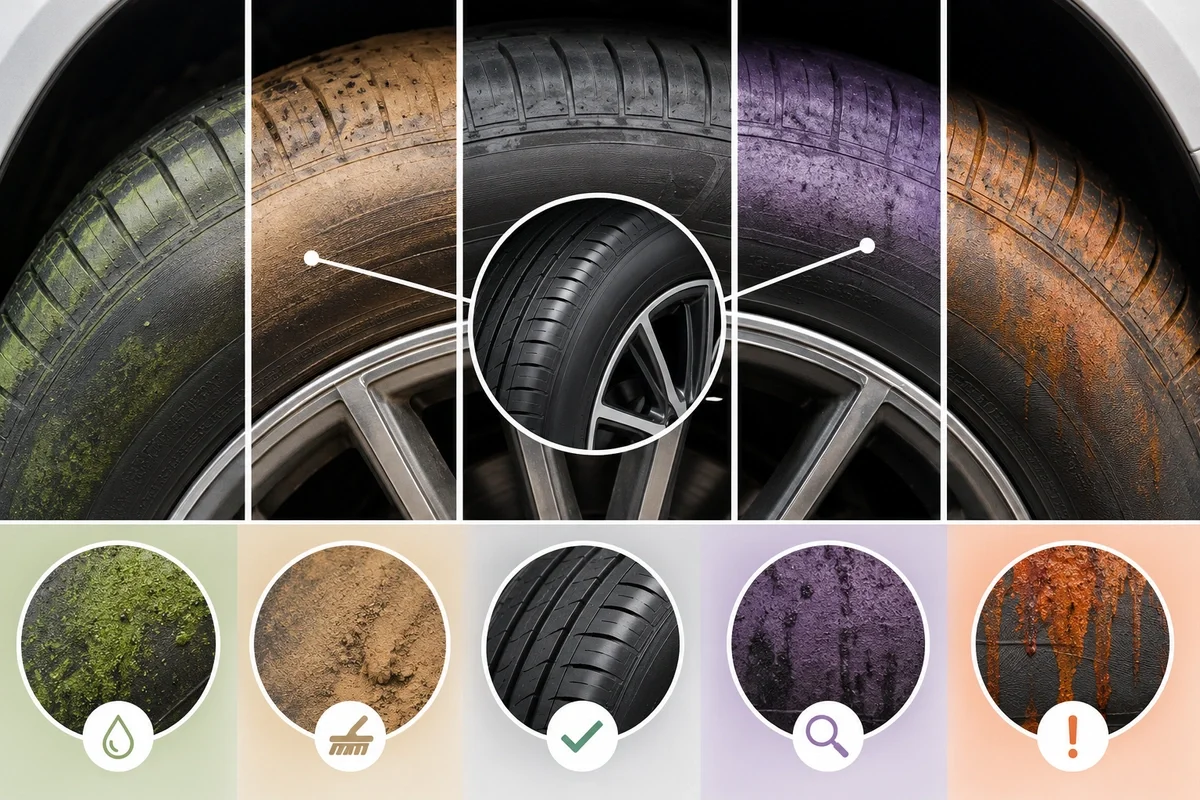
Blue or multicoloured ➡ usually harmless on new tyres, but can be a warning sign on used tyres
Brown or rusty (blooming) ➡ almost always cosmetic, and easy to clean
Grey or faded ➡ possible sun damage, check for cracks and other safety signs before driving here
Blue or multicoloured shine
A blue or rainbow-like shine on new tyres means that the rubber compound is rising to the surface. It can look a little like the sheen you see on an oily puddle. It sounds alarming, but it's purely cosmetic.
These "anti-agents" are protective chemicals built into the rubber during manufacturing, and it's completely normal for a small amount to migrate to the surface over time. Seeing them has no effect on grip, handling or how long the tyres last. A wash with ordinary car shampoo will take it away.
On used tyres, though, the same look can mean something different. Here, it can be a warning sign that the tyre has overheated and run hotter than it was designed to handle.
If you see this on a used tyre, don't ignore it. Check your tyre for other problems such as bulges, blisters, loss of shape, or uneven wear across the tread. Depending on how bad it is, the tyre may need to be replaced. It's also worth asking why it overheated in the first place, because the colour is a symptom rather than the root cause. The usual culprits are underinflation (which makes the tyre flex and heat up more), overloading the vehicle beyond its limits, or hard driving, such as heavy braking and fast cornering.
Brown/rusty (blooming) colour
A brown or rusty colour on the sidewalls and outer edges of a tyre is known as tyre blooming. It's one of the most common types of discolouration, and usually comes from one of two things.
The first is a natural chemical reaction. Tyres contain antiozonant chemicals that protect the rubber from the ozone in the air, which would otherwise dry out and break it down over time. When these chemicals do their job and rise to the surface, they react with oxygen and can leave behind a brown, rusty bloom. In other words, a little blooming is actually a sign that the rubber's protection is working.
The second cause is simply trapped dirt. Tyres pick up road grime, brake dust, and general muck, which builds up over time and can give the rubber a dull, brownish look.
Either way, blooming is only cosmetic and easy to deal with. Here's how to keep it under control:
- Cleaning regularly with a soft, non-metal brush. Avoid metal brushes, as they can scratch, puncture, or damage the rubber.
- Using chemical tyre cleaner, or simply plain soap and warm water, to lift dirt and surface residue. Rinse thoroughly afterwards.
- Apply black tyre lacquer once the tyre is clean and dry. This helps guard against future blooming and keeps the rubber looking fresh and deep black.
Top tip: A quick clean every few weeks is usually enough to keep blooming at bay and your tyres looking their best.
Grey or faded colour
Tyres which look grey, dull, or faded have usually been affected by the sun and UV exposure. You'll often notice one tyre looks worse than another, depending on which side was parked in the sun.
Unlike the other two, this grey discolouration can be dangerous and shouldn't be brushed off. Strong sunlight and UV rays dry out the rubber, reducing its strength and grip and raising the risk of failure. Over time, that drying leads to surface cracking and eventually dry rot, where the rubber becomes brittle and starts to break apart. A tyre in this state is far more likely to fail, especially at speed or under load.
If your tyres look grey or faded, give them a proper inspection rather than just cleaning them. Look closely for:
- Fine cracks or "crazing" in the sidewall or between the tread blocks
- Brittleness or a hard, dry feel to the rubber
- Flaking, crumbling, or other signs of dry rot
Replace any tyre that shows these signs. If you're not completely sure whether a tyre is still safe, a professional like us ;-), can inspect and give you an honest answer- it's never worth the risk of guessing.
You can slow this kind of ageing down in future by applying a UV protectant to your tyre, a bit like suncream for your rubber, and by parking in the shade or in a garage whenever you can. Tyres also age from the inside out, so even if a tyre looks fine, it should be checked by a professional once it's around 4 to 5 years old. Most manufacturers recommend replacing tyres at around 6 to 8 years of age, regardless of tread depth. Being the safety-conscious tyre champions we are, our recommendation is to just replace at 5 years old, regardless of how many miles you have done! Sorry, not what you might want to read, but a safe tyre is cheaper than an accident!
When to clean, and when to call a professional
Tyre Colour | Clean or Call a Professional | Description |
| Blue/ multicolour (new Tyre) | Clean | Usually, anti-agent chemicals migrating to the surface of the tyre |
| Blue/ multicolour (used Tyre) | Call | Possible overheating in the tyre |
| Brown/ rust | Clean | Antiozonant reaction or dirt build-up |
| Grey | Call | Sun and UV exposure, the tyre is likely showing its age and may be unsafe |
Our Recommendation - The bottom line
Most tyre discolouration is harmless and washes straight off. But knowing the difference between a cosmetic change and an early warning can protect both your safety and your wallet. A blue sheen on a new tyre or a brown bloom on the sidewall is usually nothing to worry about- but a grey, faded tyre, or a strange colour on a used one, deserves a proper look. When in doubt, it's always worth getting your tyres checked; it could save your life one day.
And if you need to replace a tyre because of UV damage, dry rot, or anything else, Tyre Runner can help. We'll let you compare tyres from trusted retailers and find a local fitter near you, so you can get back on the road safely with confidence.