Tyre Pressure Warning Light: What It Means and What to Do
You’re driving along and a small orange light appears on your dashboard- the one that looks like a tyre with an exclamation mark inside. It’s your tyre pressure warning light, and it’s part of your car’s tyre pressure monitoring system (TPMS).
The good news is that it’s rarely an emergency, and it’s usually quick to sort. Below we explain what the light means, why it comes on, what to do next, and how to reset it- plus how to tell a genuine low-pressure warning apart from a system fail.
What is the tyre pressure warning light?
The tyre pressure warning light is a safety feature in modern cars that alters you when the air pressure in one more tyre is too low (or occasionally too high). It’s usually shown s a horseshoe-shaped symbol with an exclamation mark inside, or a tyre cross-section market with dashes, and it sits on your dashboard.
Correct tyre pressure matters more than most drivers realise. It affects your grip, handling, braking distance, fuel efficiency and how long your tyres last. When pressure drops outside the recommended range, all of those are compromised- which is exactly why the warning exists.
The two types of TPMS: direct vs indirect
Cars use one of two tyre pressure monitoring systems and knowing which you have helps you understand how quickly and accurately it reacts.
Direct TPMS uses a sensor fitted inside each tyre, usually on the valve. These sensors measure the actual air pressure and send it wirelessly to the car’s control module. If any tyres falls below (or rises above) the set threshold, the warning light comes on. Direct system tends to be more precise and can often tell you which tyre is affected.
Indirect TPMS doesn’t use in tyre-sensors. Instead, it borrows data from the ABS and wheel-speed sensors. A tyre with lower pressure has slightly smaller diameter and spins a little faster than the others, and the system reads that difference as a pressure problem. Indirect systems are cheaper but less precise, and they need resetting after you re-inflate or change a tyre.
Either way, the message is the same: check your tyres.
Why has my tyre pressure light come on?
There are a few common causes:
- A slow puncture or leak- a nail, screw or sharp stone can let air out gradually.
- Gradual pressure loss- tyres naturally lose a small amount of air over time.
- Cold weather- air contracts as temperatures drop, so the light often appears on the first cold morning of the season even when nothing is wrong.
- A recent tyre change or rotation- the system my simply need resetting
- A TPMS fault- occasionally the light reflects a sensor or system problems rather than an actual pressure issue.
Slow or flashing? Low pressure vs TPMS fault
This is the quickest way to work out what you’re dealing with.
- A steady, solid light usually means genuine low pressure. Check and re-inflate your tyres.
- A light that flashes for around 60-90 seconds when you start the car and then stays on usually points to a TPMS sensor or system fault, not a pressure problem. Your tyres may be fine, but the system can’t reliably warn you – so it’s worth getting checked.
If the light stays on even after you’ve inflated your tyres to the correct pressure, treat it as possible fault and have it looked at.
What to do the tyre pressure warning light comes on
- Stay calm. This generally isn’t an emergency- avoid sudden braking or sharp steering.
- Find a safe place to stop. Signal, pull over to the left onto the hard shoulder or into a safe lay-by or car park, away from traffic. Reduce your speed on the way there to limit any further tyre damage.
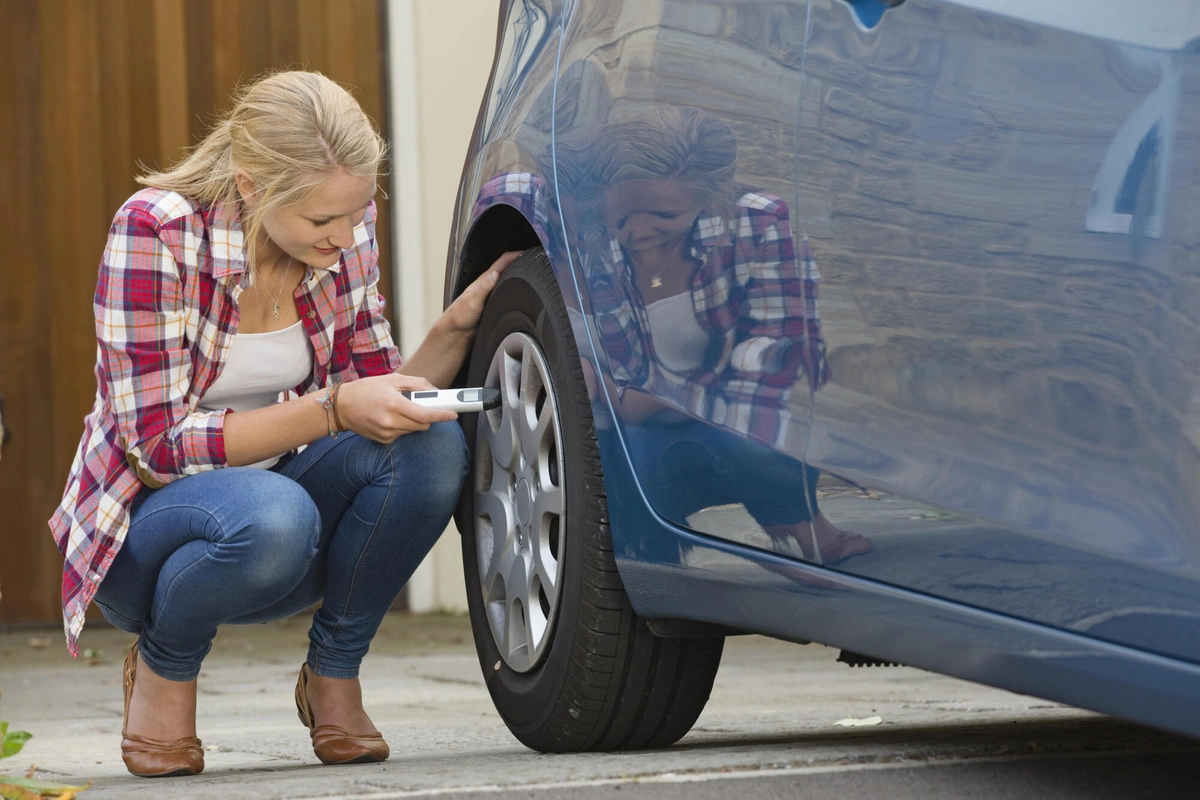
- Check all your tyres. Turn off the engine, apply the handbrake and use a tyre pressure gauge to check each tyre- including the spare, if you have one. Compare the readings to your car’s recommended pressures, found in the owner’s manual or on sticker inside the driver’s door frame. For best accuracy, check pressures when the tyres are cold.
- Adjust the pressure. Inflate any underinflated tyres to the recommend level; let a little air out of any that are overinflated. Don’t overinflate- too much pressure is as problematic as too little.
- Look for damage. Check for punctures, cuts, bulges or anything lodged in the tread. Visible damage my need immediate repair or a replacement tyre.
How to reset the tyre pressure warning light
In many cars the light switches off by itself after a short drive once the pressures are correct. In others you’ll need to reset the TPMS manually- usually through the onboard computer, a dashboard button or the infotainment menu. Because the method varies by make and model, check your owner’s manual for exact steps.
Can you drive with the tyre pressure light on?
You can drive a short distance with the light on, but only carefully- keep your speed low and avoid sharp turns and hard braking while you get somewhere safe to check the tyres. If a tyre is fully flat, don’t drive on it: fit your spare or call for roadside assistance. And remember, the light going off doesn’t guarantee perfect pressure, so keep checking your tyres regularly with a gauge.
Tyre pressure and your MOT
In the UK, TPMS that isn’t working correctly can cause an MOT failure for cars first registered on or after 1 January 2012, because a functioning system is part of the test. That’s another reason not to ignore a warning light that flashes and stays on- it may point to a fault that needs fixing before your next MOT.
When to get professional help
Most tyre pressure warnings are solved by simply re-inflating your tyres. But if the light keeps coming on or blinking, if it stays lit after you’ve corrected the pressures, or if you suspect a puncture or a more serious fault, don’t ignore it. Have a qualified mechanic or tyre centre inspect it properly.
If a tyre does need replacing, it’s worth comparing your options first- buying tyres online is often cheaper than a walk-in price, and you can still choose local fitting or mobile fitting to suit you.
The bottom line
Your tyre pressure warning light is one of the simplest safety features to act on- and on of the easiest to keep on top of. Checking your pressures regularly protects your grip, braking, fuel economy and tyre life, and helps you catch small problems before they become big ones.
Not sure what your tyres should be set to? See our guide to recommended tyre pressures- and if you need new tyres, compare prices and fitting options across the UK with Tyre Runner.
Frequently asked questions
What does the tyre pressure warning light look like? It’s usually an amber symbol shaped like a horseshoe (a tyre cross-section) with an exclamation mark in the middle.
Why is my tyre pressure light on when my tyres look fine? Often, it’s cold weather causing a temporary pressure drop, a slow leak that isn’t visible, or a TPMS fault. Check pressures with a gauge to be sure.
Why won’t the tyre pressure light turn off after I’ve inflated my tyres? The system may need resetting, or there may be a TPMS sensor fault. Try a short drive or a manual reset; if it persists, get it checked.
How often should I check my tyre pressure? At least once a month, and before any long journey or when carrying a heavy load- regardless of whether the warning light is on.