Tyre Types & Ratings Explained: The Complete UK Buyer's Guide
Buying tyres is rarely anyone’s idea of a good time – but it’s one of the most important decisions you’ll make for your car. Get it right and you drive safer, spend less on fuel and replace your tyres less often. Get it wrong and you could face longer stopping distances, faster wear, a hefty fine, or even an invalidated insurance policy.
The trouble is the jargon. Start researching online and you’re quickly buried under summer, winter and all-season options, speed ratings, load indexes and mysterious codes – and what on earth is a homologated tyre anyway?
This guide explains every tyre term in plain English, so you can choose the right tyre for your vehicle with confidence. We’ll cover the different tyre types, how to read the ratings on the sidewall, what the tyre label tells you, and how to make a choice that keeps you safe and saves you money.
Summer, winter and all-season tyres: what’s the difference?
One of the first choices you’ll face is which type of tyre to run. In the UK there’s no legal requirement to fit winter tyres – unlike countries such as Germany, Austria and Sweden – but there are good safety reasons to consider.
The three main options are:
- Summer tyres – the standard fit on most cars, optimised for warmer conditions and dry or wet roads above 7 °C.
- Winter tyres – built for cold weather, ice and snow.
- All-season – a year-round compromise between the two.
What are winter tyres and why do they help?
Standard summer tyres simply don’t perform as well in the cold. Below around 7 °C their rubber stiffens and loss flexibility, which reduces grip and control. On icy roads, that can turn nervy drive into a dangerous one.
Winter tyres are made from a different rubber compound that stays flexible in low temperatures, so grip and stability hold up when it’s cold. They also have a deeper tread and more sipes (fine grooves), which improve handling in wet, snowy and icy conditions.
If you rely on your car through winter – the commute, the school run, the early starts - a set of winter tyres buys you real peace of mind when the weather turns.

Can you use winter tyres all year round?
It’s tempting to fit winter tyres and forget about swapping them – but it’s not a good idea. The same soft compound that grips so well in the cold becomes a liability once temperatures climb above 7 °C: you’ll see longer stopping distances and reduced grip in corners, and the tyres wear our faster.
The sensible approach is to switch with the seasons. A good rule of thumb in the UK is to fit winter tyres around October and swap back to summer tyres in March.
Are winter tyres worth it?
Winter tyres cost a little more up front, and running two sets means extra outlay – you’ll need somewhere to store the spare set, and unless you fit them yourself, because each set only does part of the year, they last longer.
For many drivers, the added safety in bad weather is worth the hassle and cost. If you regularly drive in ice and snow, they’re an easy decision.
What are all-season tyres?
Can’t face the twice-yearly swap? All-season tyres are the middle-ground option. They won’t match winter tyres in deep winter or summer tyres in high summer, but they void the worst of running the wrong tyre in the wrong season.
They perform well in the wet – reducing the risk of aquaplaning – and their high-density grooves help the car grip in chargeable weather. If you rarely encounter heavy ice or snow, all-season tyres are a practical, low-fuss choice.
Tyre speed and load ratings explained
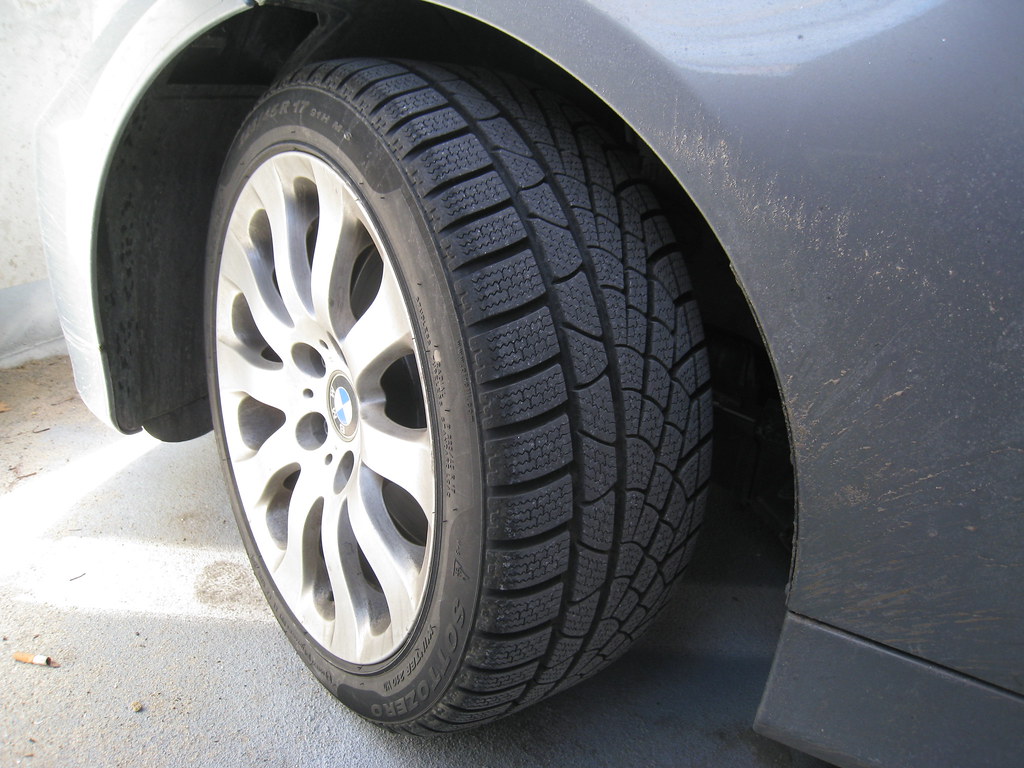
Every tyre carries a load index and a speed rating, printed on the sidewall at the end of the size markings – for example, 91T. The number (91) is the load index the letter (T) is the speed rating. Both must match your vehicle’s requirements, and getting either wrong can affect your insurance.
What is a tyre speed rating?
The speed rating is the maximum speed the tyre can safely sustain. You might think anything above the national speed limit is irrelevant, but the rating has to match your car’s top speed regardless of how you actually drive – fitting a lower-rated tyre than specified can invalidate your insurance. If you’re not sure of your car’s top speed, check with the manufacturer.
Here are the common tyre speed ratings and their maximum speeds:
| Speed rating | Max speed (mph) |
| N | 87 |
| P | 93 |
| Q | 99 |
| R | 106 |
| S | 112 |
| T | 118 |
| U | 124 |
| H | 130 |
| V | 149 |
| W | 168 |
| Y | 186 |
Note: The ratings run in order of speed, not alphabet, which is why H (130 mph) sits above U. You may also see a Z rating, which historically indicates a tyre rated above 149 mph and is often shown alongside W or Y (e.g. “ZR”).
What is a tyre load rating (load index)?
The load index tells you the maximum weight each tyre can carry. In our 91T example, a load index of 91 means a capacity of 615 kg per tyre. The scale runs from 62 (265 kg) up to 150 (3,350 kg).
Your vehicle manufacturer can tell you the load rating you need. It’s also worth thinking about how you use the car: if you often travel fully loaded – passengers, kids, dogs and a boot full of luggage – moving up step in load capacity can be sensible.
Fitting tyres with low a load rating can lead to faster wear, reduced stability and comfort, and a greater risk of a blowout. As with speed ratings, you’re legally required to run the correct tyres, so you could be fined if your tyres don’t meet the specification.
What are homologated tyres?
If you drive a prestige or performance car, it’s worth knowing about homologation. A homologated tyre is one that’s been tailor-made and fine-tuned for a specific vehicle.
Here’s how it works: when a manufacturer develops a new tyre, it’s tested and released for general sale. Some premium car makers then take that tyre and test it extensively on their own vehicles, tuning it until it’s perfectly matched to that particular model. The result is a homologated version of the tyre.
These tyres cost more, but they’re the best you can buy for that specific car – offering benefits such as sharper braking, tighter handling and a smoother ride.
How to choose the right homologated tyre
Homologated tyres carry a code on the sidewall that identifies the car maker they were developed for. Match the code to your vehicle’s brand:
| Manufacturer | Homologation code |
| Audi | A0, A01 |
| Audi quattro | RO1, RO2, RO3 |
| BMW | * |
| BMW / Mercedes | *MO |
| BMW / Mercedes Runflat | *MOE |
| Jaguar | J |
| Land Rover | LR |
| Maserati | MGT |
| Mercedes- Benz | MO, MO1 |
| Mercedes- Benz Runflat | MOE |
| Porsche | NO, N1, N2 |
| Tesla | TO |
Understanding the tyre label
Every new tyre sold in the UK comes with a tyre label that rates three key areas of performance. Learning to read it helps you compare tyres and make a better-informed choice.
The label was significantly revised in May 2021, so the current version looks different from the older design you may remember.
Todays label shows:
- Fuel efficiency – shown by a fuel-pump icon and graded from A (most efficient) to E (least efficient). Because tyres account for a large share of a car’s fuel use through rolling resistance, an A-rated tyre can meaningfully cut your fuel bill over time.
- Wet grip – shown by rain-cloud icon and also graded A to E. This is the most safety- critical rating, reflecting braking performance on wet roads; the gap between an A and an E rating adds up to several car lengths in stopping distance.
- External rolling noise – now shown as a decibel (dB) value plus a class of A, B or C (A being quietest), replacing the old three-soundwave pictogram.
The 2021 label also added pictograms for severe snow grip (the “3PMSF” three-peak mountain snowflake) and ice grip, plus a QR code that links to the official EPREL, product database for full details.
A quick note for UK drivers: After Brexit, Great Britain technically retained the A-G label format in law, while the EU and Northern Ireland moved to the A-E format above. In practice, the vast majority of tyres on sale across the UK now carry the newer 2021-style label- so that’s the one you’re most likely to see when shopping.
How to choose the right tyre: a quick recap
You’re now armed with everything you need to choose well:
- Pick the right tyre type for how and where you drive – summer, winter, or all-season.
- Match the speed rating and load index to your vehicle’s specification to stay legal and insured.
- Consider homologated tyres if you drive a prestige or performance car.
- Use the tyre label to compare fuel efficiency, wet grip and noise at a glance.
Choose well and you’ll keep fuel costs down, drive more safely in cold, wet and icy weather, and get the most life out of your tyres.
Frequently asked questions
Is it illegal to fit winter tyres in the UK? No. There’s no legal requirement to fit winter tyres in the UK, and no law against them either – it’s entirely your choice. In some other European countries, winter tyres are mandatory in certain conditions.
At what temperature should I switch to winter tyres? Winter tyres come into their own below round 7°C, where summer tyres start to lose grip. In the UK, many drivers fit winter tyres around October and swap back to summer tyres in March.
What does 91T mean on a tyre? It’s the tyre’s load index and sped rating. The 91 means each tyre can carry up to 615 kg, and the T means it’s rated for speeds up to 118 mph.
Can the wrong tyres invalidate my insurance? Yes. Fitting tyres with a lower speed or load rating than your vehicle specifies can invalidate your insurance and may also result in a fine, as you’re legally required to run the correct tyres.
Are homologated tyres worth the extra cost? For prestige and performance cars, often yes. A homologated tyre is tuned specifically for your model and can deliver sharper braking, tighter handling and a smoother ride than a standard equivalent.
What’s the most important rating on the tyre label? Wet grip is the most safety-critical, as it reflects braking distance on wet roads. Fuel efficiency matters most for running costs, and the noise rating for comfort.